SLIDER
sensing
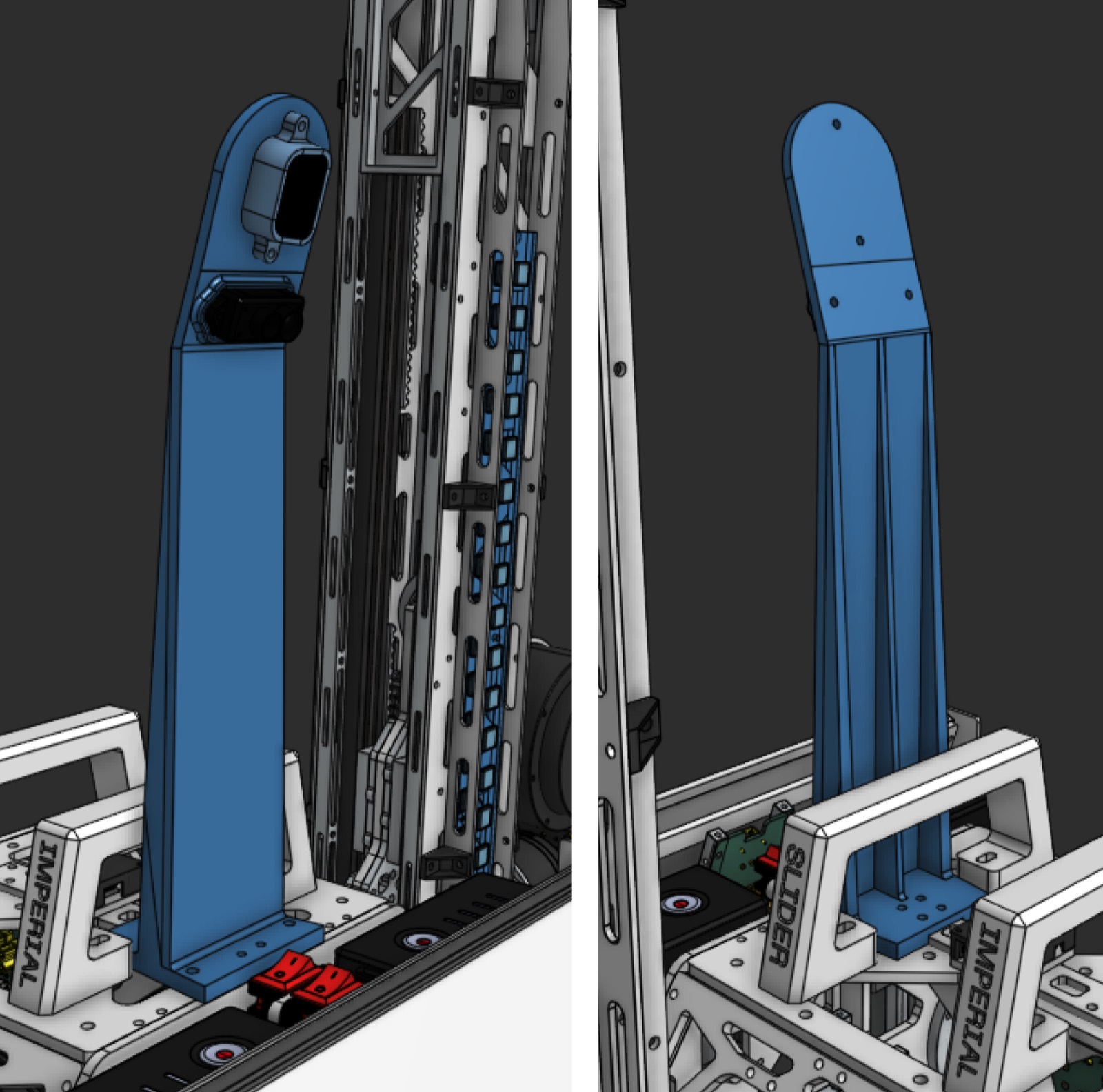
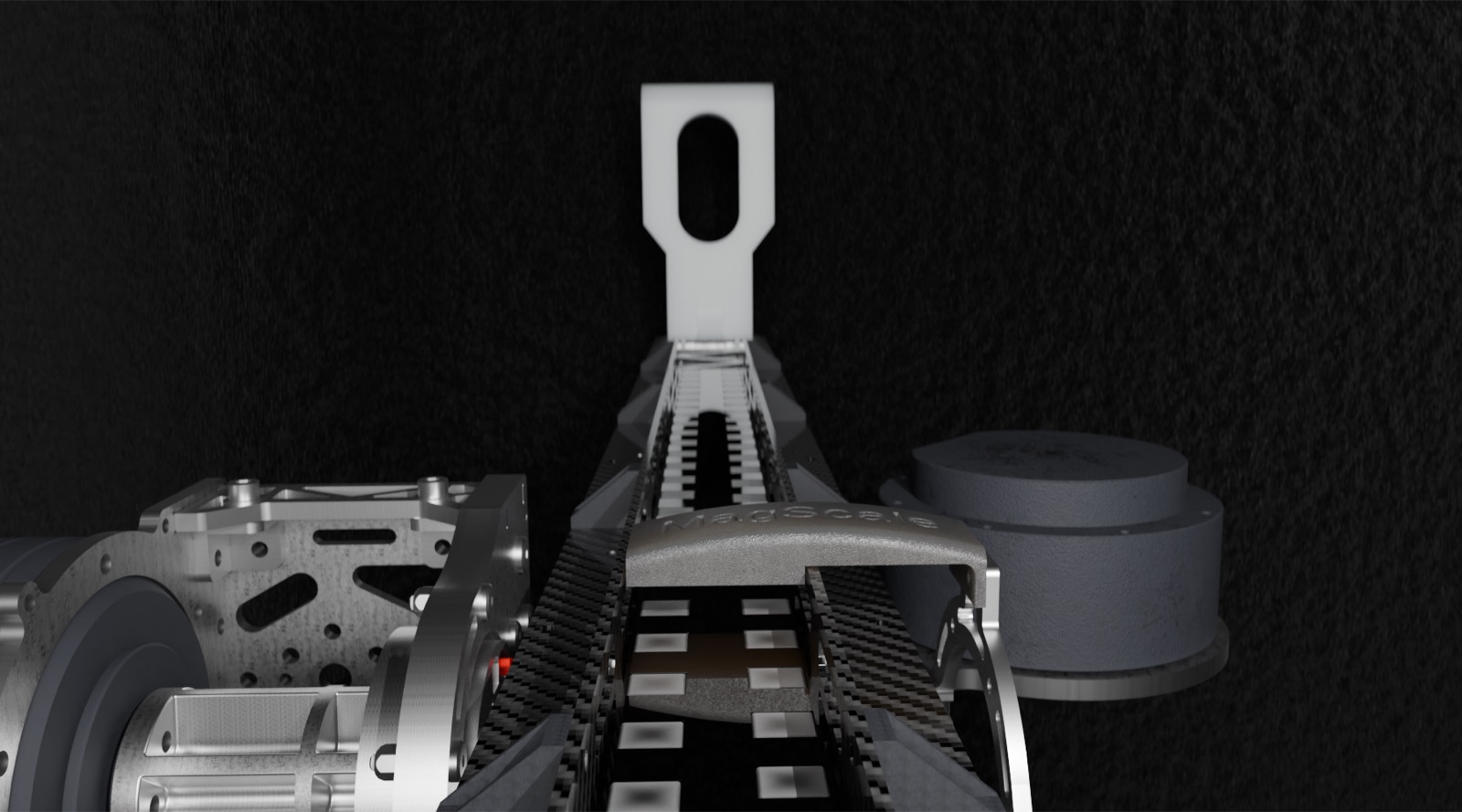
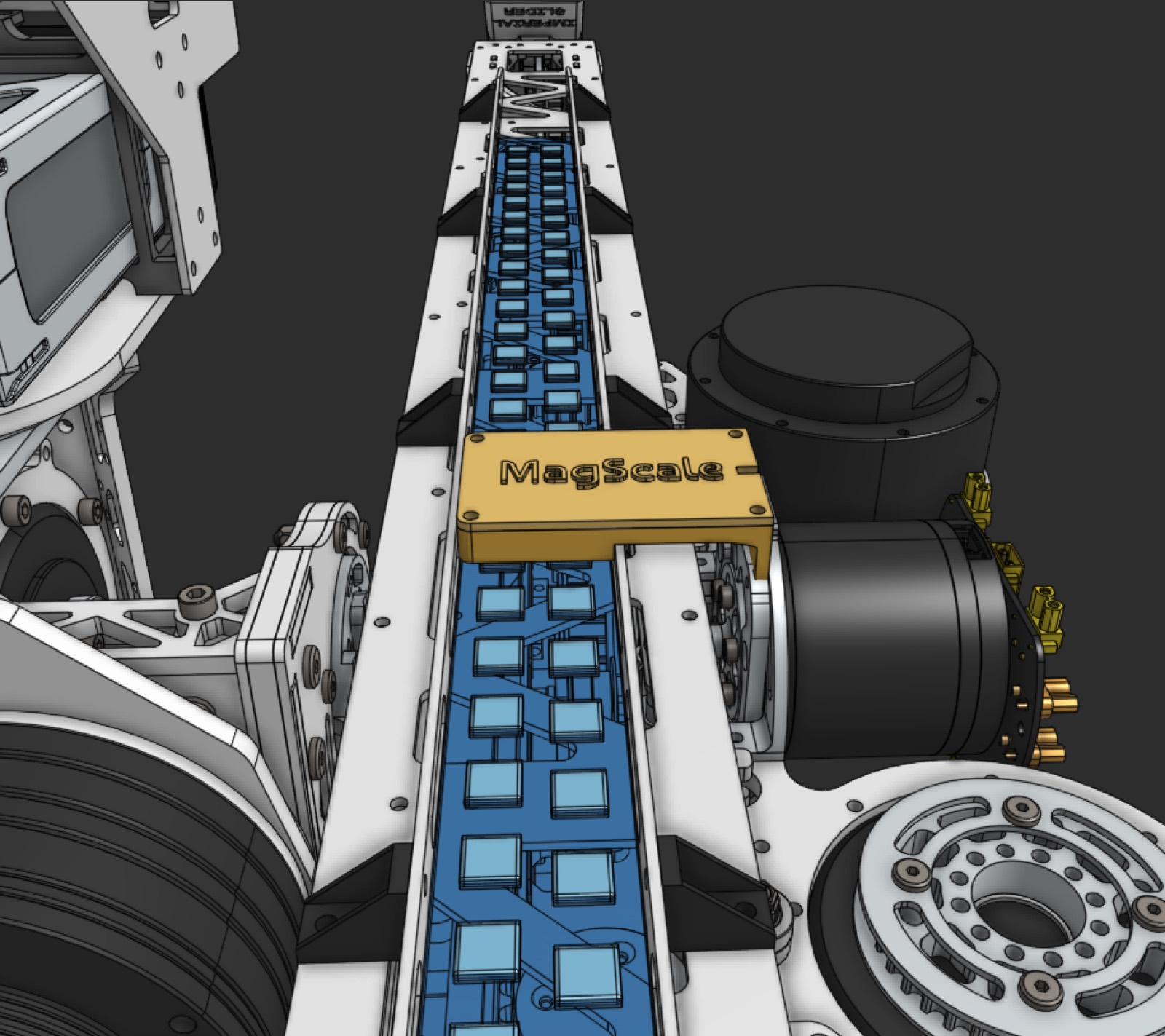
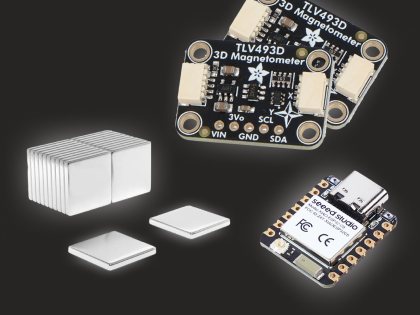
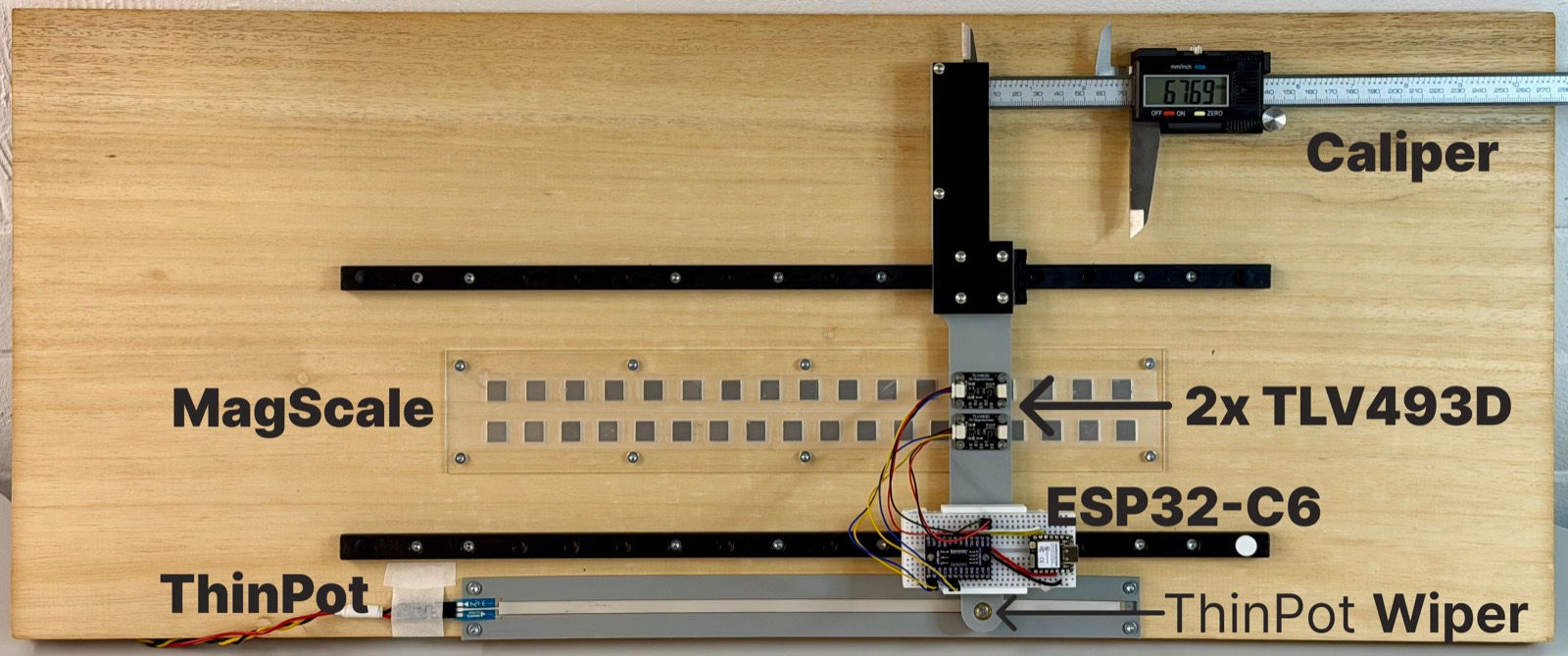
no. 1 MagScale: a cheap magnetic ruler that knows its position to under a millimetre the moment it powers on. Built for SLIDER, a walking robot whose sliding legs had no way to be measured.
Try it
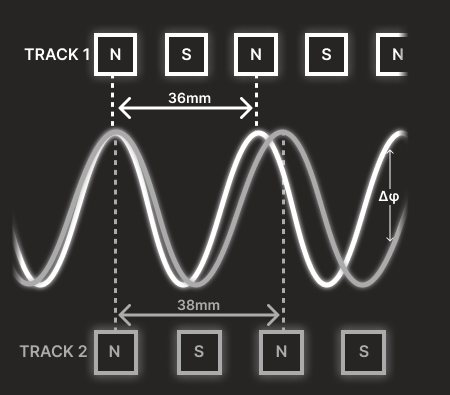
Two rows of magnets with slightly different spacing. Each row on its own repeats, so it can't tell you where you are. The difference between them never repeats along the rail, so one reading gives the absolute position.
Part two: seeing the ground ahead
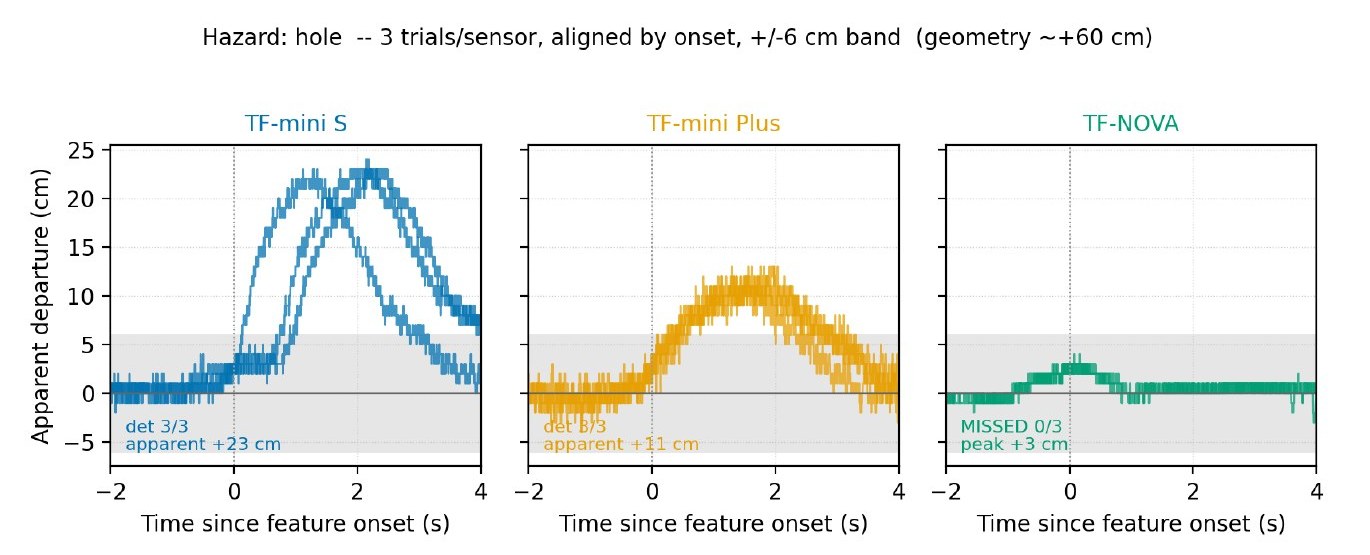
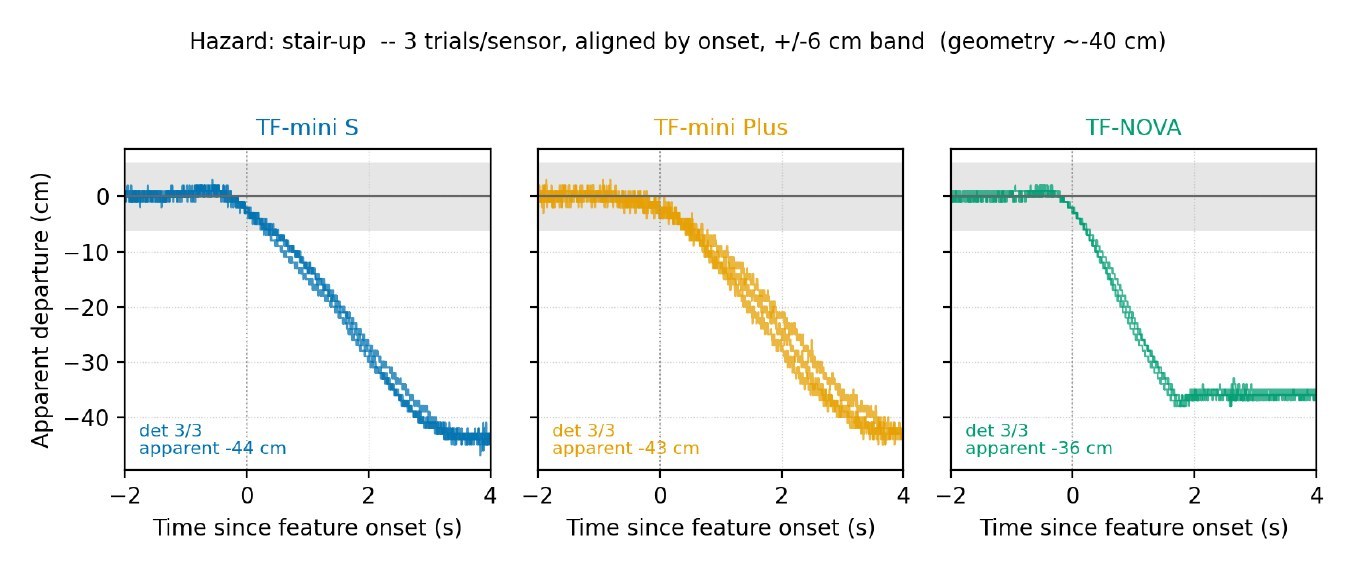
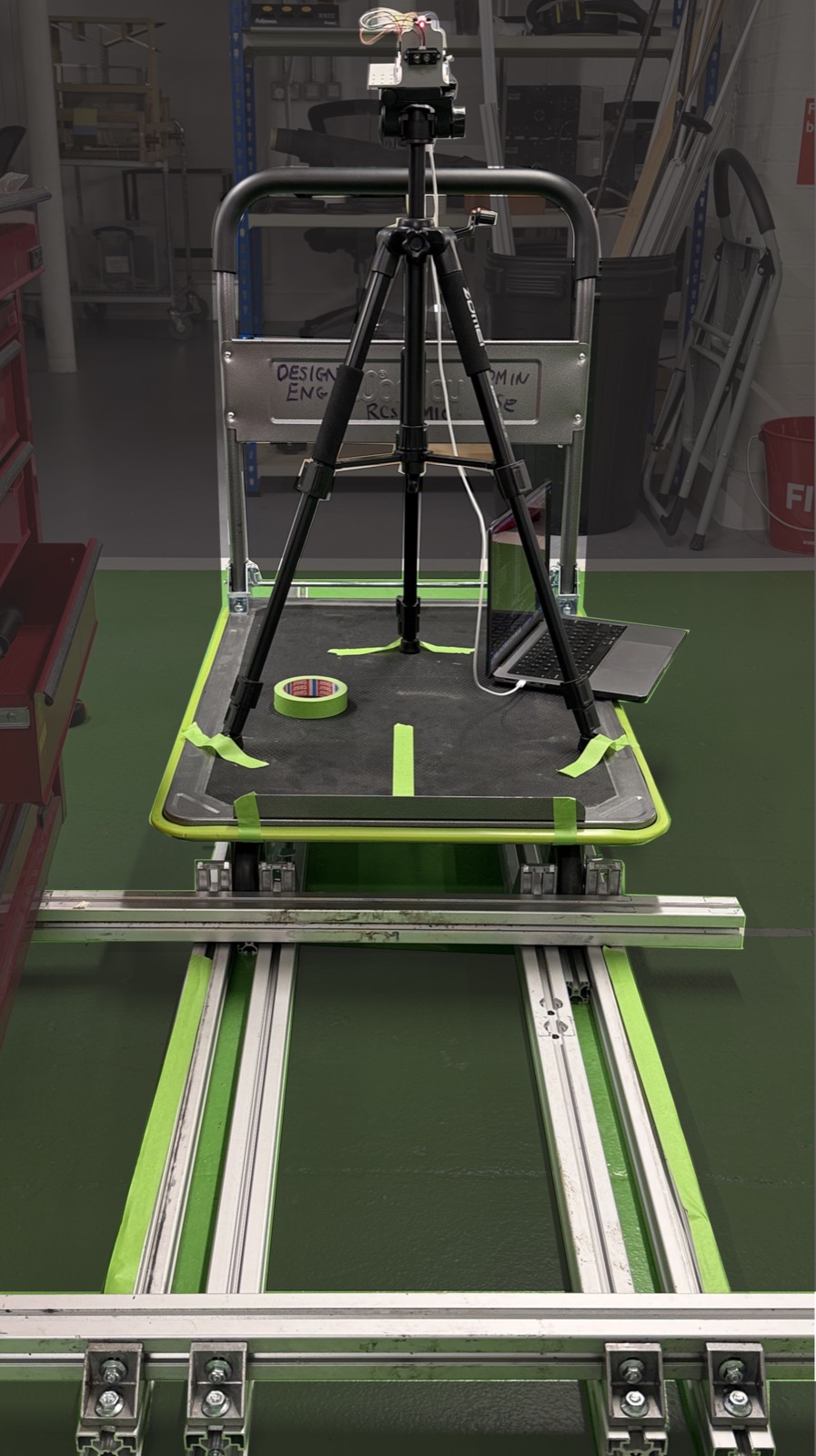
SLIDER couldn’t see a step or a drop ahead. I compared three small laser distance sensors over eight tests, including full sun. The graphs show each sensor’s reading as it crosses the hole and the step: the wide-beam one (green) never saw the hole, while the narrowest (blue) read its depth almost exactly. Fitting both costs about £59, and they don’t interfere.