Mars
rover
wheel
no. 2 Rovers read terrain by eye, and sand fools them. This scaled Curiosity wheel feels the ground instead: strain gauges on tapered spokes classify terrain from its vibration. Validated with NASA JPL engineers.
Team of three.
The problem
Rovers judge the ground by camera. A camera can’t feel softness, and sand that looks fine can trap a wheel.
The idea
So let the wheel feel it. Every surface flexes the spokes differently, and strain gauges can read that.
Spoke design
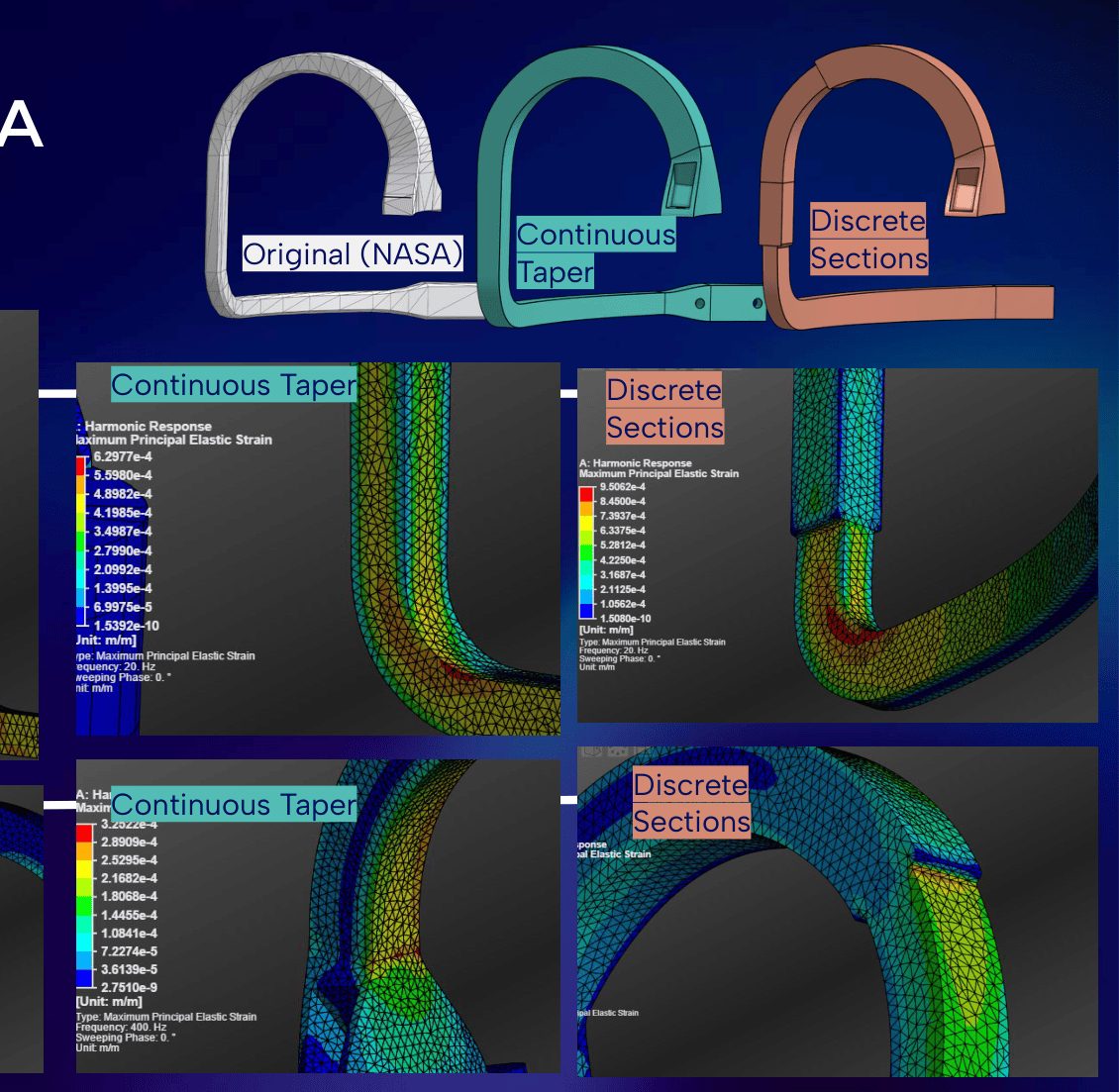
Three spoke shapes, simulated. The tapered one kept the vibration frequencies furthest apart.
One spoke on the bench
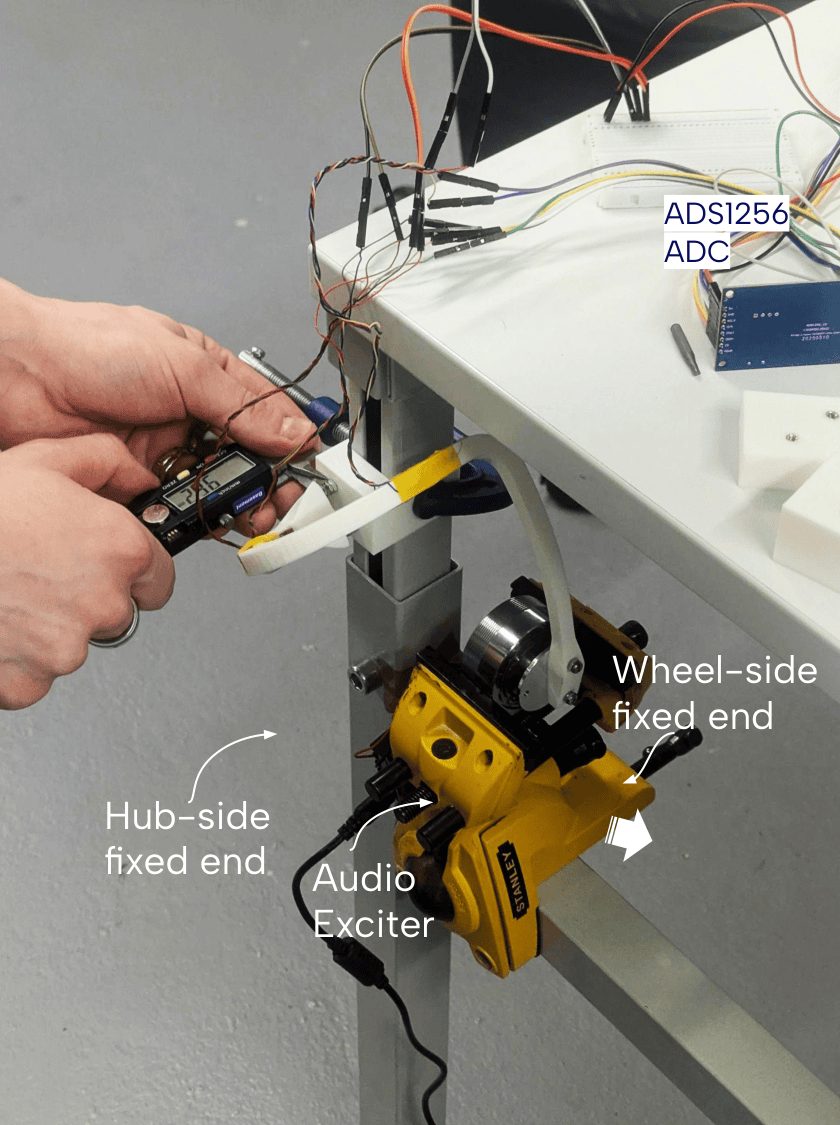
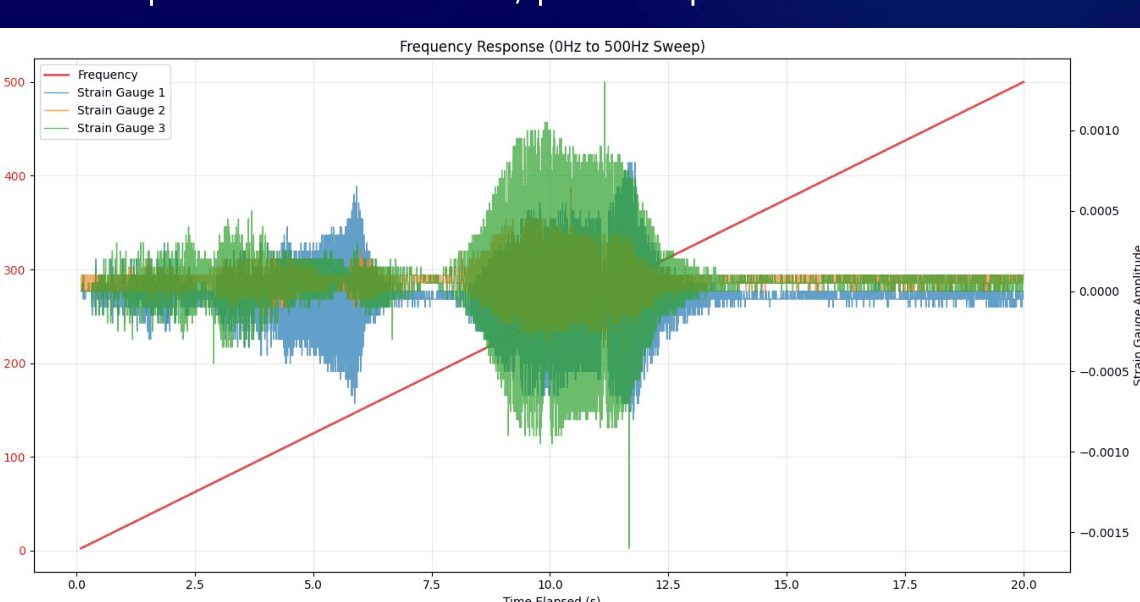
One printed spoke, clamped and shaken through a frequency sweep to check the simulation.
What the spoke said
Each gauge picks up its own frequency range, so two gauges beat one.
The full wheel
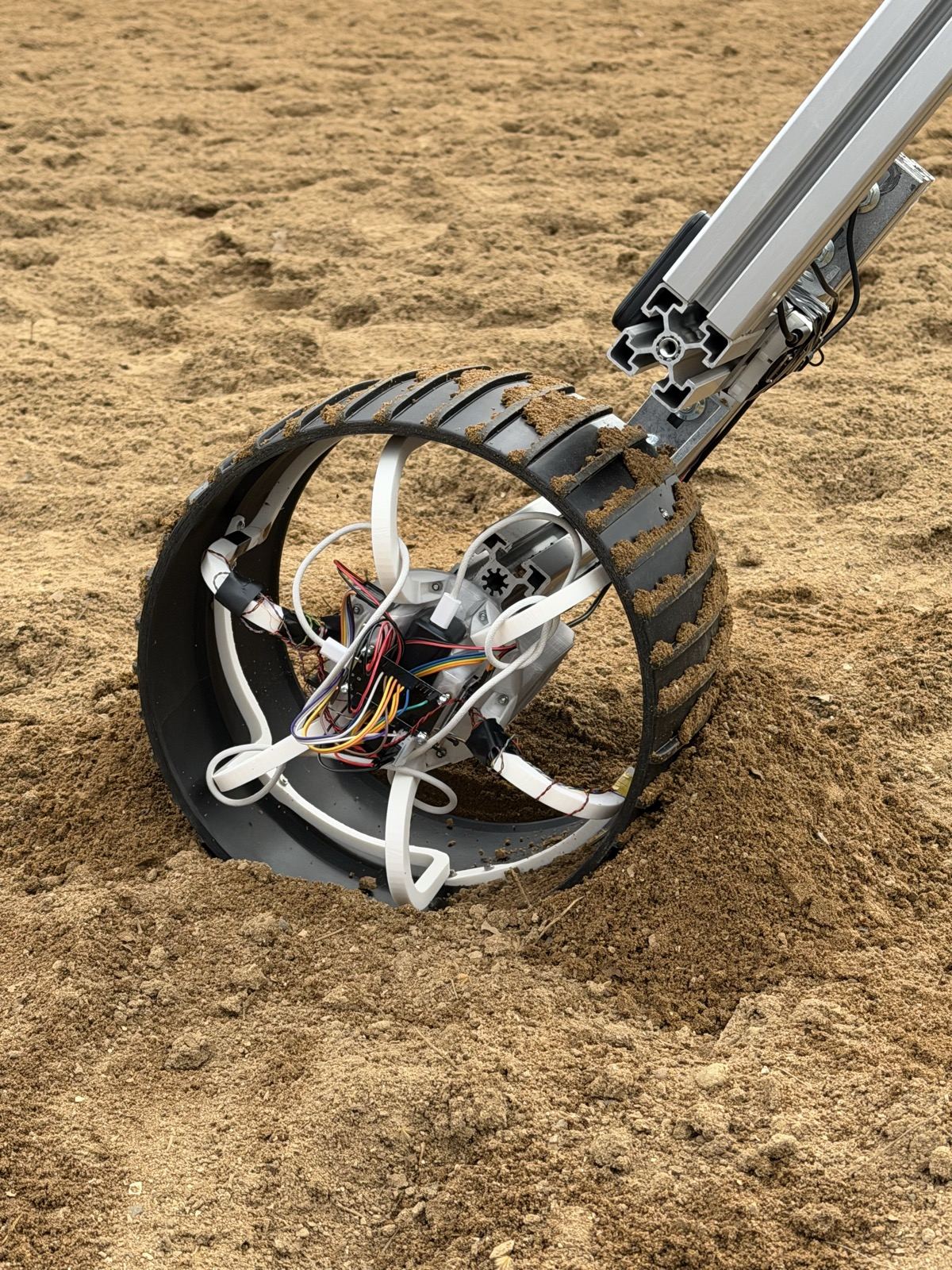
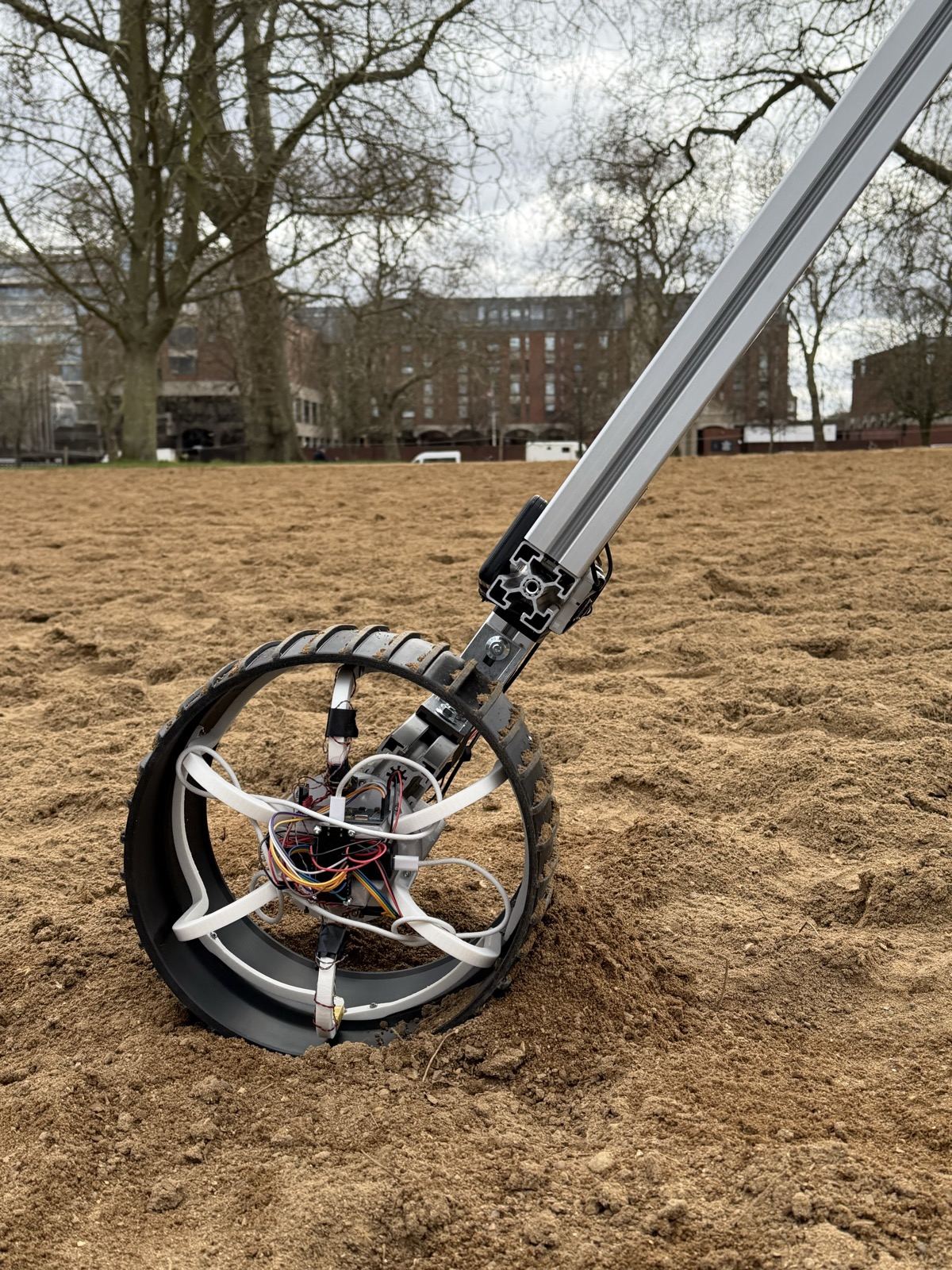
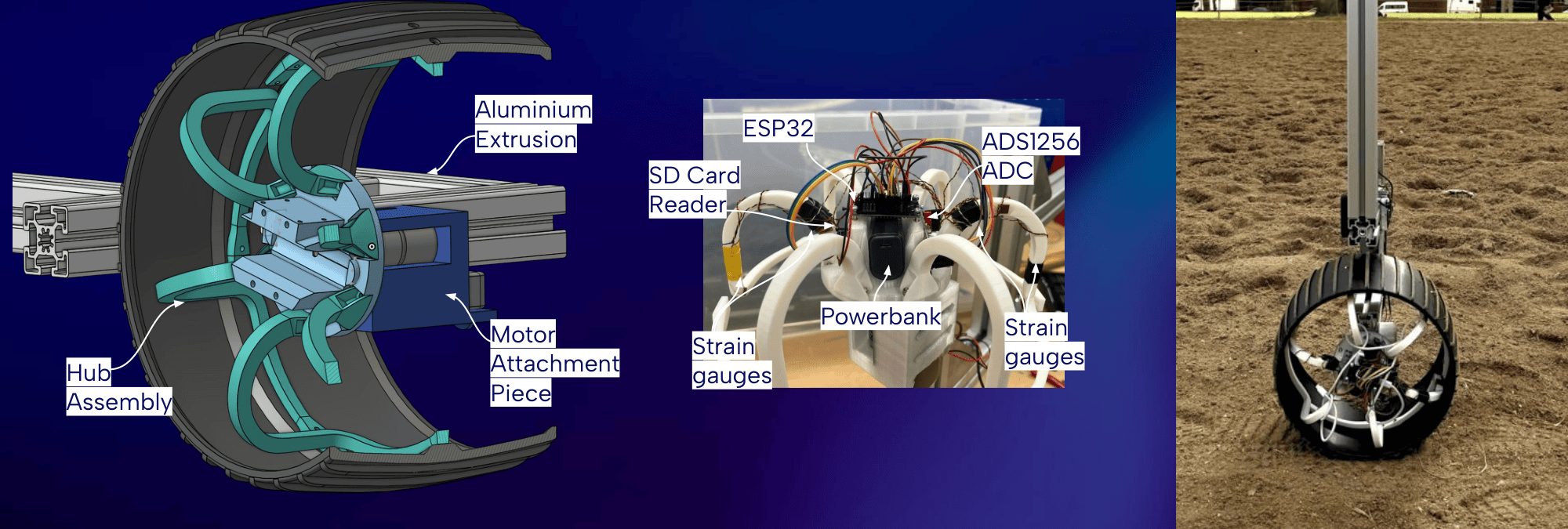
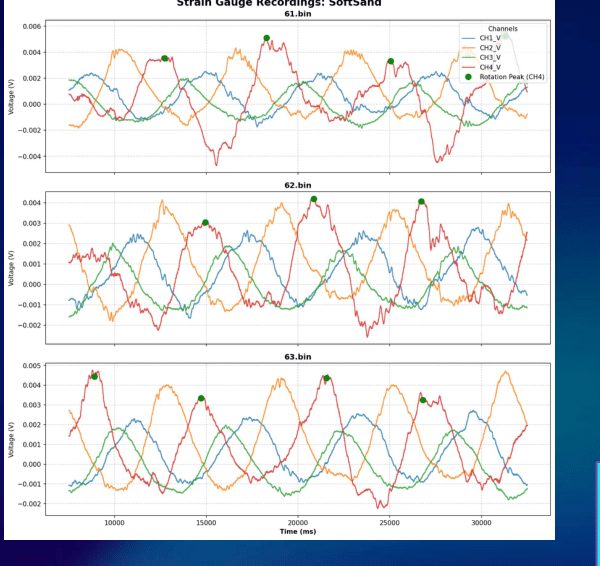
A 60% scale printed wheel on a portable rig. Four strain channels, about 1000 readings a second.
Out in the park
Ten surfaces: concrete, cobbles, grass, gravel, soft sand and more.
From signal to pattern
Each wheel turn is split into frequency bands. The energy in each band is that surface’s fingerprint.
Result
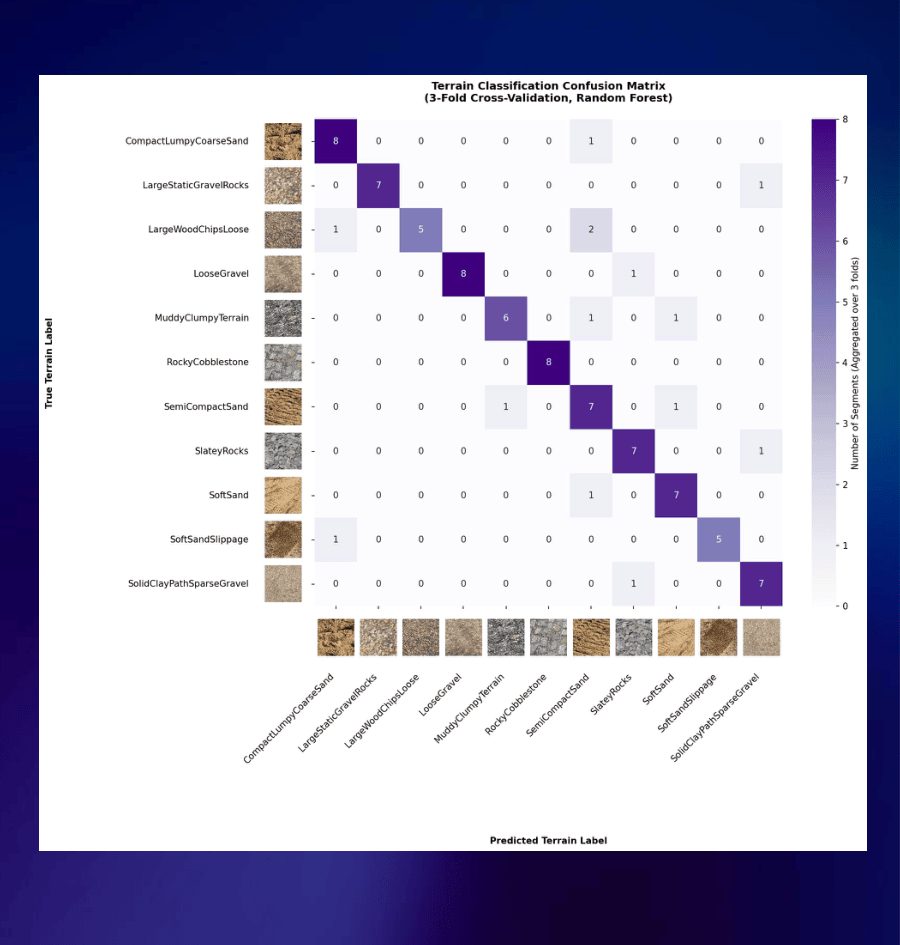
A Random Forest learns the fingerprints. It mostly mixes up look-alike surfaces, and wheel slip shows clearly.
Watch
Try it
Each surface shakes the wheel's spokes in its own way. Split that vibration into frequency bands and the pattern is a fingerprint a classifier can learn. Pick a terrain.
Classifier reads this as . Illustration only: the shapes are simplified, not recorded data.